
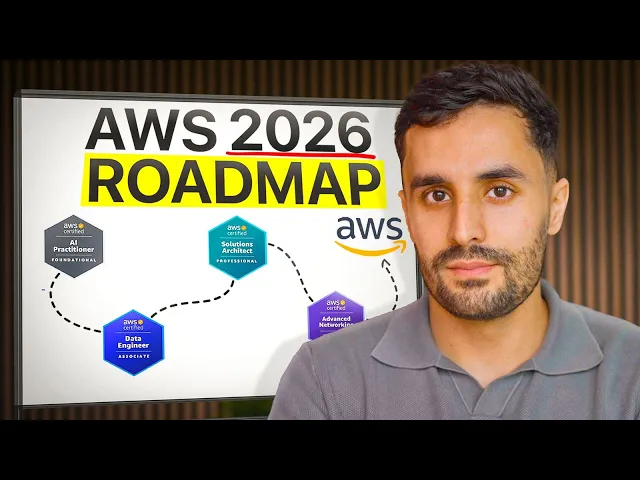
Tackling an AWS certification without a technical background can feel daunting, but the AWS Certified Cloud Practitioner (CCP) exam is achievable with the right approach. On a difficulty scale, it’s about 2/5 for beginners. As a foundational certification, no prior cloud experience is required but it’s not effortless. Success comes from understanding core concepts, not just memorization.
Topics like billing, cloud economics, and the shared responsibility model are often easier for non-technical learners, as they tie into familiar business concepts. For instance, sales professionals may quickly grasp pay-as-you-go pricing, and HR professionals can relate to the shared responsibility model.
On the other hand, areas like Identity and Access Management (IAM), Virtual Private Cloud (VPC), and AWS service distinctions can be more challenging. Concepts like VPC security groups or the many service acronyms often trip up beginners.
Here’s an idea of the exam’s question styles:
Scenario-Based: "A company wants to reduce its total cost of ownership (TCO) by moving to AWS. Which service helps them compare costs?"
Definitional: "Which AWS service provides secure, resizable compute capacity in the cloud?"
Concept-Matching: "Under the shared responsibility model, what is the customer’s responsibility?"
The exam tests your ability to connect business needs with AWS solutions—a crucial skill in today’s cloud-enabled world.
How Long Does It Take to Pass the AWS Certification With Zero IT Background?
The time it takes to prepare for the AWS Cloud Practitioner exam varies, but a realistic timeline for someone with no IT background is between 2 to 8 weeks. There are no formal prerequisites for the AWS Cloud Practitioner exam, making it accessible even if you’re new to cloud computing. Your personal pace and study method will be the biggest factors.
Here’s a breakdown based on different learner profiles:
The Busy Full-Time Worker: Studying 1-2 hours per day, you can be ready in 6-8 weeks. Consistency is more important than cramming.
The Fast Learner: If you can dedicate several hours a day and absorb new information quickly, you might be exam-ready in 2-3 weeks.
The Zero-Tech-Background Adult Learner: If technology concepts are entirely new to you, plan for a solid 8 weeks to allow time for concepts to sink in and for ample practice.
Your study format also plays a critical role. Relying on random free videos can be a slow and disjointed process, often leaving you with knowledge gaps. In contrast, a structured path, like the adaptive learning offered by StudyTech AI, streamlines your preparation by focusing on your weak areas, helping you pass faster. Understanding your certification level—such as foundational, associate, or professional—also helps tailor your study plan to meet the specific requirements and depth of knowledge needed for your chosen AWS certification.
Roles Where AWS Knowledge Helps You Even Without Technical Skills
Gaining AWS knowledge isn’t about becoming a developer overnight. The AWS platform and its ecosystem are relevant for a wide range of business roles, not just technical ones. Understanding how the AWS ecosystem operates gives you a competitive edge in roles across the entire organization. AWS certifications provide value for cloud professionals and those seeking to develop cloud expertise, even in non-technical positions. This understanding is especially important in fields like project management, where AWS knowledge helps professionals better manage cloud projects and collaborate with technical teams.
Marketing Roles
Marketers today rely on data-driven tools for analytics, customer data platforms (CDPs), and audience segmentation. Understanding how cloud services like Amazon S3 (for data storage) and Amazon Redshift (for data warehousing) power your company's BI dashboards allows you to have more intelligent conversations with data teams and make better-informed strategic decisions.
Sales & Business Development
Cloud economics is a powerful tool in sales conversations. When you can confidently discuss concepts like Total Cost of Ownership (TCO) or Return on Investment (ROI) for a cloud migration, you build credibility with potential clients. You're no longer just selling a product; you're providing a strategic solution to their business challenges.
Finance & Operations
For finance and operations professionals, understanding AWS billing and cost allocation is crucial. Cloud services can lead to overspending if not managed correctly. With AWS knowledge, you can analyze cost reports, identify optimization opportunities, and implement budget controls, directly impacting the company's bottom line.
HR & People Operations
Modern Human Resource Information Systems (HRIS) are often cloud-based. As an HR professional, knowing cloud fundamentals helps you evaluate new vendor tools more effectively. You can ask smarter questions about data security, compliance, and scalability, ensuring you choose the best solutions for your organization. For those looking to pivot into a tech career, learning a step-by-step process for getting AWS certified is an excellent starting point.
Customer Success & Support
If your company's product is built on AWS, your ability to support customers improves dramatically when you understand the underlying infrastructure. For example, being able to explain concepts like multi-region resilience shows customers you have a deep understanding of the product's reliability and helps build trust.
Project Managers & Business Analysts
Project management is a key area where AWS knowledge is valuable, especially for project managers and business analysts who act as the bridge between business stakeholders and technical teams. When you understand cloud components, you can coordinate more effectively with engineers, create more accurate project timelines, and translate technical requirements into business objectives.
Small Business Owners & Freelancers
As a small business owner or freelancer, you’re constantly making decisions about which software and vendors to use. A foundational knowledge of AWS helps you evaluate SaaS providers and make choices that are scalable, secure, and cost-effective for your business.
Do You Need Coding to Pass AWS Certifications?
Let’s be clear: No, you do not need to know how to code to pass the AWS Certified Cloud Practitioner or the AWS Certified AI Practitioner exams. These certifications are designed to test your conceptual understanding of the cloud, not your ability to write Python or JavaScript.
When AWS refers to “technical understanding,” it means familiarity with IT concepts and vocabulary, not programming. For the CCP exam, your focus should be on what a service does, why you would use it, and how it impacts cost and security. Having basic technical knowledge, including familiarity with operating systems, is helpful for progressing to higher-level AWS certs.
Consider the difference:
Coding-Heavy Exams: Associate certifications, such as the AWS Certified Developer - Associate and AWS Certified Solutions Architect - Associate, require more technical skills and hands-on experience. Advanced certifications like the AWS Certified DevOps Engineer demand even deeper technical expertise, including deploying, managing, and automating AWS environments.
Conceptual Exams: The CCP focuses on high-level knowledge.
Here are examples of tasks that require zero coding but are essential for the exam:
Explaining the benefits of cloud computing vs. on-premises infrastructure.
Identifying the appropriate AWS service for a specific business need (e.g., S3 for object storage).
Understanding the different pricing models (e.g., On-Demand, Reserved Instances).
Describing the core principles of the AWS Well-Architected Framework.
Interpreting a scenario to determine who is responsible for a task under the shared responsibility model.
For non-technical professionals, the skills that matter more than coding are vocabulary recognition, scenario interpretation, and cost management comprehension.
Best Study Plan for Non-IT Professionals Preparing for AWS Exams
A structured, tactical plan is your best bet for passing the AWS exam without feeling overwhelmed. Here is a sample 4-week plan designed for busy professionals.
Week 1: Cloud Concepts & Economics
Focus on the “why” behind the cloud. Learn about the value proposition of AWS, the global infrastructure (Regions, Availability Zones), and key economic principles like TCO and OpEx vs. CapEx.Week 2: Core Services
Dive into the most essential services. Use “concept grouping” to avoid memorizing 200+ services. For example, group EC2, S3, RDS, and Lambda as the foundational compute, storage, database, and serverless services. Explain them to yourself in simple terms.Week 3: Security & Compliance
This week is all about the AWS Shared Responsibility Model, IAM (users, groups, roles, policies), and key security services. Security is a major part of the exam, so dedicate ample time here.Week 4: Practice & Refine
Shift your focus to practice exams and flashcards. This is where you master applying your knowledge to scenarios. Use practice tests to identify your weak areas. Platforms that offer adaptive assessments are invaluable here, as they pinpoint exactly what you need to review. Then, use personalized flashcards to build retention on those specific topics. Pursuing professional or specialty certifications after your initial exam can further support your professional growth by deepening your expertise and opening up new career opportunities in cloud computing.
A daily study routine for a busy professional might look like this:
Morning (20 mins): Review flashcards.
Lunch (30 mins): Watch a short video on a new service.
Evening (60 mins): Take a practice quiz and review the answers.
Take your first full mock exam at the end of Week 3 to gauge your readiness. Use the results to guide your final week of study. For more guidance, explore additional smarter strategies for preparing for AWS certifications. AWS certifications are worth pursuing as they serve as valuable milestones for career advancement and professional credibility. Earning a specialty certification can further enhance your career trajectory by demonstrating advanced skills and commitment to continuous professional growth.
How AI and Cloud Knowledge Future-Proof Your Career (Even If You’re Not Technical)
In today’s business landscape, cloud literacy is the new digital literacy. Understanding cloud and AI is no longer a niche skill reserved for engineers; it's becoming a baseline expectation for professionals in almost every role.
All the AI tools making headlines run on powerful cloud infrastructure. Major business systems you use daily—from your CRM to your BI dashboards—depend on cloud platforms like AWS. Possessing cloud and AI skills protects you against job displacement by making you a more versatile and valuable team member.
Even a basic understanding of cloud principles enhances your decision-making and collaboration. You can contribute more meaningfully in meetings, understand the capabilities and limitations of your company's technology, and work more effectively with technical colleagues.
Ready to Start Your Cloud Journey?
Embarking on a new learning path can be daunting, but the rewards of becoming cloud-literate are immense. By arming yourself with this knowledge, you are not just earning a certification; you are investing in a more resilient and dynamic career.
If you’re still unsure where to begin or how to study efficiently, explore StudyTech AI’s personalized assessments and guided study paths designed specifically for non-IT professionals.
